Overcoming gender bias in AI: How UN Women’s AI School is Shaping the Future for Women Leaders
Aug
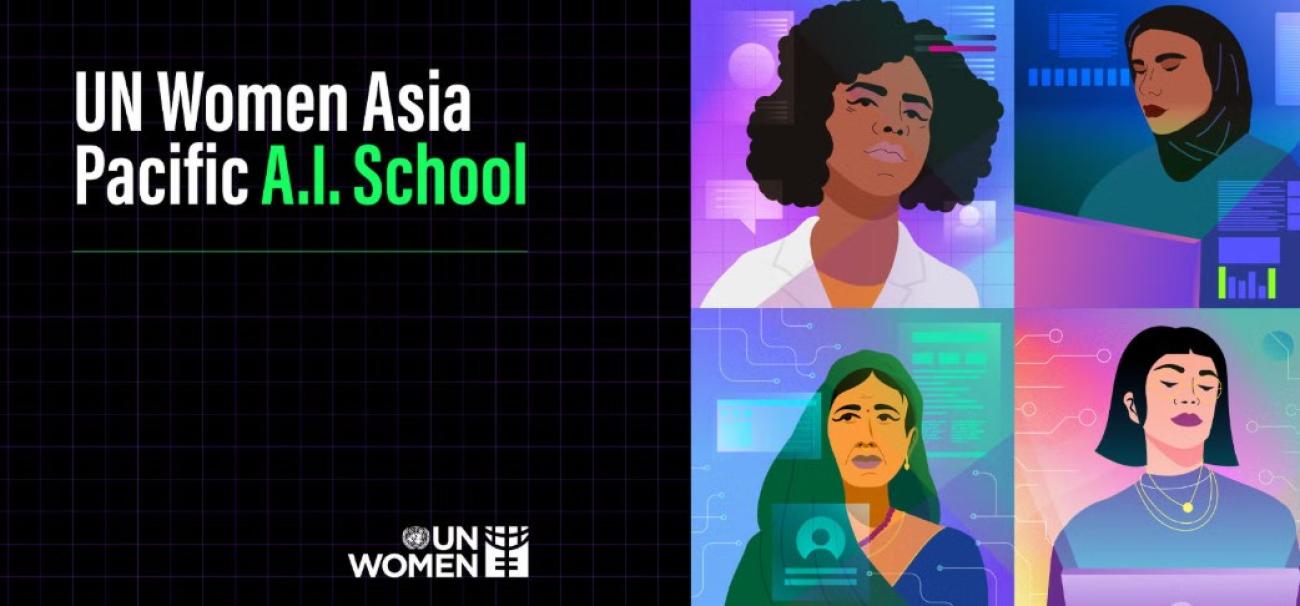
Seeking a shift from fear to empowerment, earlier this year UN Women launched a first – an AI School aimed at equipping gender equality advocates with the skills to harness AI for social change, advocacy, and organizational transformation.
Artificial Intelligence is transforming the world at breakneck speed—and UN Women is making sure women aren’t left behind. Launched by their Regional Office for Asia and the Pacific, the program’s reach is wide, targeting feminist leaders, climate justice activists, entrepreneurs, academics, and professionals from underrepresented communities. “We want women and girls at the policy table, in design rooms, and in every conversation shaping the AI economy,” Karim said.
“This started from the urgent need to make sure women and girls are not left behind,” said Emad Karim, who leads the programme. “Our vision is to position Asia and the Pacific as a leader in AI literacy and innovation for gender equality… not just as users, but as designers, contributors, and shapers of AI infrastructure that is inclusive, safe, and responsible.”

Emad Karim pointed to a glaring gap: “Research looked at over 138 countries national AI policies - only 24 referenced gender.” The School aims to change that, preparing participants to engage in policy-making, design gender-responsive AI, and address issues like bias and technology-facilitated violence.
The curriculum covers everything from AI fundamentals and responsible design to sector-specific modules like AI in communications, disaster risk reduction, and climate action. “We explain when AI works best, when it doesn’t, and how to adapt it for non-profit and development contexts,” Karim said. “It’s about knowing the tools, but also the risks - privacy, copyright, trust, and when human-led storytelling is more powerful.”
AI’s built in gender bias – it’s about the data models
Bias in AI is a core concern. “Out of 133 AI systems analysed, 44% showed gender bias,” Karim noted. “That comes from the data—and our internet is biased. With most AI designers being men, safety considerations for women are often missed. We’re seeing an increase in deepfakes, revenge porn, stalking… most of the victims are women.”
Yet, he sees opportunity: “AI can help women bypass traditional barriers. You don’t need a computer science degree to build a website or an app anymore. It can level the playing field in education, entrepreneurship, and advocacy—if we make sure access is equitable.”
Impact is already visible. Success stories from participants reveal a shift from fear to empowerment—participants who once saw AI as a threat now use it to develop gender-responsive innovations.
“One participant came in terrified of AI, convinced it would doom the world,” Karim recalled. “After training, she was using it to cut project timelines from weeks to hours, and she’d started speaking up in policy discussions. She told me it was eye-opening.”
The new literacy calls for being AI savvy
As the School expands, including to India, Karim stresses adaptability: “We customise content for each country, looking at their AI readiness, gender gaps, and national priorities. The goal is always the same—more women and girls at the table where AI’s future is decided.”
His advice to women in the AI era? “Be AI-literate—this is the new literacy. Know the models, the strengths, the risks. We shouldn’t trust AI blindly, nor reject it outright. The future of AI depends on us—on whether we design it for equality, justice, and dignity, or let it widen the gaps we’re trying to close.”
This story is adapted from UN News Hindi.



UN entities involved in this initiative
Goals we are supporting through this initiative